
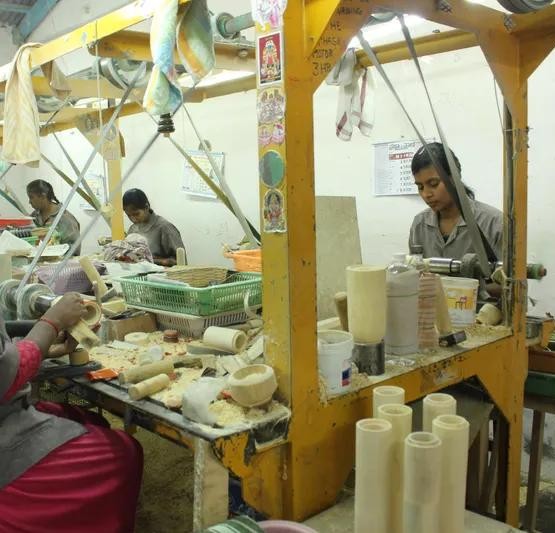
Take a behind-the-scenes look at the traditional techniques used by artisans to create vibrant Channapatna wooden toys.
Selecting Sustainable Wood
The journey of a Channapatna toy begins with carefully selected hale wood (Wrightia tinctoria), known for its lightweight, smooth texture, and durability. Sourced responsibly, this wood supports sustainable forestry while providing the perfect material for handcrafted toys.
Wood Turning Process
The prepared wood is mounted on a traditional lathe, where skilled artisans shape it into various forms using specialized hand tools. This precise wood-turning technique requires years of experience to create smooth, symmetrical, and beautifully crafted pieces.
Natural Vegetable Dyes
Instead of synthetic paints, Channapatna toys are colored using natural vegetable-based dyes and non-toxic pigments. These vibrant colors are safe for children and give each toy its distinctive, cheerful appearance while remaining environmentally friendly.
Lacquer Coating
A layer of natural lacquer is applied while the toy rotates on the lathe, creating a glossy and long-lasting finish. This traditional process enhances the toy’s beauty, protects the wood, and highlights its natural grain.
Hand Polishing
Each toy is carefully polished by hand to achieve a smooth, silky surface free from rough edges. This final touch ensures the toys are safe for children to handle and pleasant to touch.
Quality Checks
Before reaching customers, every toy undergoes careful inspection for shape, finish, durability, and safety. Only products that meet high craftsmanship standards are approved, ensuring consistent quality and customer satisfaction.
Importance of Artisan Skills
Creating Channapatna toys is a craft passed down through generations, preserving techniques that are over 200 years old. The expertise, patience, and creativity of these artisans make every toy unique and reflect India’s rich cultural heritage.
Supporting Local Communities
Choosing authentic Channapatna toys directly supports local artisan families and helps preserve traditional livelihoods. Every purchase contributes to sustaining this centuries-old craft, encouraging rural employment and keeping India’s handcrafted heritage alive for future generations.